PARTNER CONTENT


We firmly believe in the India story
Amit Gupta, founder and chief executive officer of Agrifields, talks about his mission to lead the Indian agricultural shift and what it takes to build a multi-geography business.
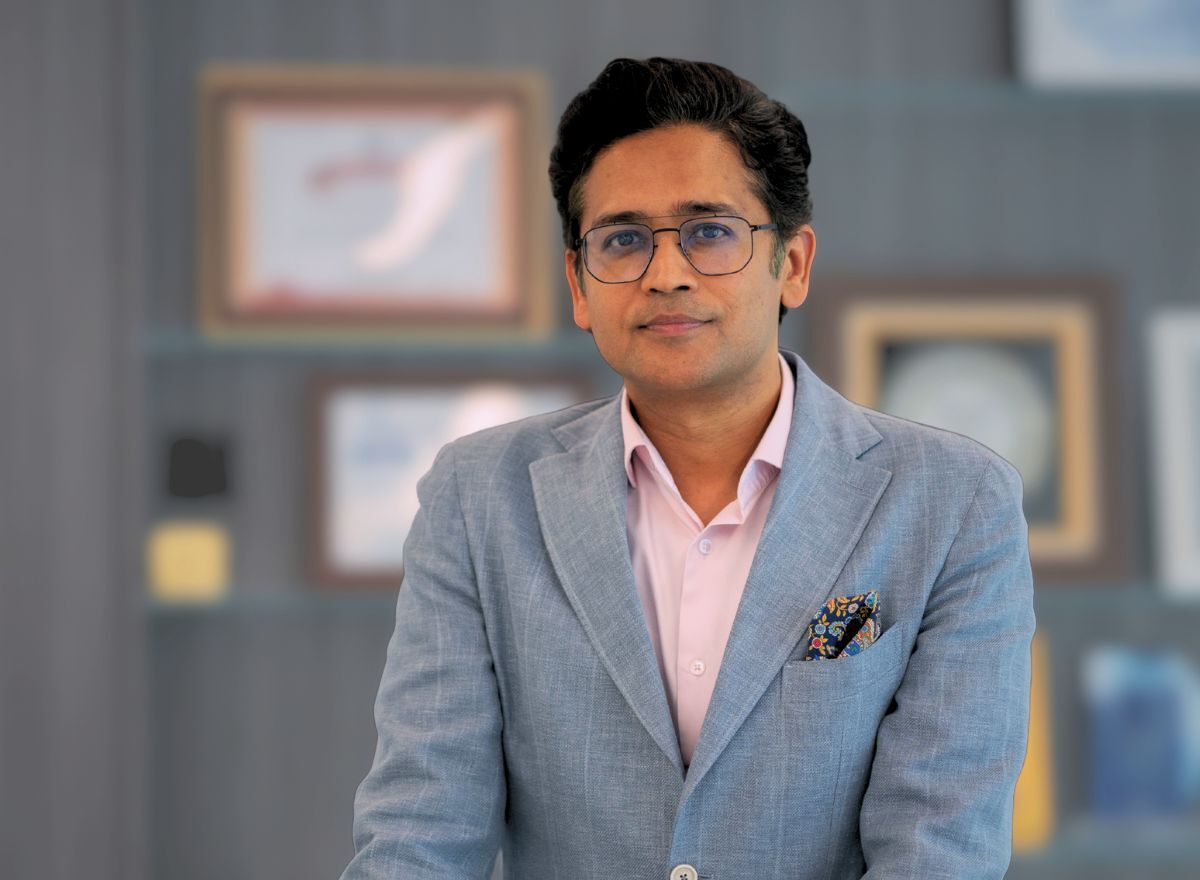
Amit Gupta sits at the centre of an ambitious vision—to fortify the Indian agriculture story and empower the farmers with the best of the best. In his 40s, bespectacled and sporting a navy jacket, he breaks it all down rather simply. “We want to connect Indian farmers with the world and equip them with the industry’s best practices,” he says.
Gupta is the founder and chief executive officer of Agrifields, which has become an important cog in the agricultural trajectory of India. Agrifields offers a full suite of fertiliser products, from raw materials to intermediates and finished products, and in turn, sells them to some of the leading companies in India. An earlier piece in The Morning Context delved into the mechanics of this industry and how Agrifields became one of the leading companies by reimagining fertiliser products.
“Before Agrifields this business was being done in bits and pieces, dribs and drabs, by traditional companies with little or no ambition. Reimagining fertiliser products as one big suite of offerings, sourced from world class producers has led Agrifields to become one of the leading and dependable companies in its sector.”
Agrifield’s journey began nearly a decade ago, as a trader in the business. But in a matter of years, Gupta expanded the company and ventured into manufacturing too. Today, Agrifields runs a plant in the Philippines, which supplies products to other countries in Asia. The company has a foot in multiple geographies and wants to expand further across the world.
That is at the heart of Gupta’s mission. But what goes on behind the scenes in building such a business and working towards a mission? Gupta answers it all. In this interview today, he talks about how he expanded his business, the importance of relationships in trade, how technology has opened new doors and his leadership style.
Edited excerpts:
How did you lead the transition of Agrifields from a trader to a manufacturer in just three years?
Agrifields has grown simply because of the way we approach business. It isn’t about the money or transaction value, but we always want to give the best outcome to our suppliers and to our buyers. As a procurement business, I removed myself from the equation and delivered maximum value for both the parties. And that was a unique approach because typically, people focus on deriving the maximum value for themselves, sometimes at the cost of one or both sides.
This approach was slowly but surely felt by the industry. More and more people came to us and asked for help in solving their procurement challenges.
When we acquired the Philippines plant, it became a different ball game altogether. As we ventured into manufacturing, it required a different mindset to operate. What we were trading became our raw material. But because of our earlier approach, our existing relationships helped us hugely. People were ready to give us additional support wherever we needed. We were new to the business, but we were received warmly.
“What we poured into the procurement business came back to us in a different way.”
There are always day-to-day challenges, of course. But it is not the transaction value that drives our company, it’s the emotional core that does. With that philosophy, we stabilized our plant and the overall manufacturing operation. We have delivered on our responsibilities very effectively.
How do you view the role of technology in your business?
I love to educate myself and understand the future of humanity. That is in my nature.
For agriculture specifically, by 2040, we should have farms that are completely mechanized, which sow and harvest without human touch. That is the world we are heading towards.
Today, technology is already a big part of our industry. We have satellites helping us with data intelligence about the health of the soil, which is 80% accurate. That data is available for any company which has the ability to process and present it. Drones have become a reality even in India, where people use them to spray pesticides on farms. There are companies which provide such services if the farmers cannot afford to have their own systems. We have far more information on weather patterns today. Now, there are genetically modified seeds which can withstand pests and don’t need pesticides later in life. These kinds of developments keep me up; I keep thinking how these can be incorporated in our daily life.
We have a small investment in a company in Florida. They're developing a technology that is never heard of in the industry, it doesn't generate effluent while producing phosphoric acid. It’s a futuristic technology in our industry. And I just wanted to be a part of that journey and see how our future could possibly look like.
In India, we are setting up a farmers learning centre, which will be equipped with all the gadgets and share best practices between farmers of India and the world. We are starting with a physical classroom, but the vision is larger. Eventually, we want to expand this online.
Alongside, we are also working on a piece of land there, where we want to showcase the best practices of agriculture, for people to come and learn. We want to lead these changes in India. I am very bullish about these two initiatives.
As someone who manages people across geographies, what is your leadership style?
My team looks up to me as a leader and everything that I do becomes a standard for them to emulate. I don't have to be pretentious because I am who I am. My standards are what they are.
We have created a very high-quality of performers in the company. There is only room for A, A+ and A- players in the company. Culturally, we like to empower them to achieve the tasks. We always give our people room to learn and grow. That may come at a cost to the company, but we absorb that for the overall betterment.
What is your core company philosophy?
We have what we call our founding principles. These are spelt out clearly to all our stakeholders.
1) A long-term mindset
2) Strategic thinking
3) Implementation with resolution
4) Patience and perseverance
You will never find anyone in our company who does anything with a short-term view in mind. Every relationship we engage in is with a long-term view.
“And we give our 100% long-term vision to everything.”
How has the UAE shaped you and the business?
It has been one of the best decisions to position and start a company in the UAE. First of all, no corporate tax was a huge support to start up a new company. We learned how to operate and survived tough, challenging situations, which startups often face. The environment around is very business-friendly. It is very cosmopolitan and convenient. We're just one flight away from anywhere in the world. This country welcomes visitors very warmly. There has been tremendous support—from an infrastructure as well as social point of view—which has assisted us to move forward, integrate and definitely become a firm part of this landscape.
How do you view India’s emerging story?
We firmly believe in the India story. For our industry, India is going to be a self-sufficient economy by 2030. I've heard PM Modi speak at a platform and he said we should build not just to satisfy our own requirements, but to export as well. He has given the industry a target of going beyond just self-reliance. With that vision in mind and with the industrial houses working towards that goal, growth in our industry has been phenomenal. There is a word in Hindi called oorja. It means energy. I am seeing that oorja in India today, where everyone is so positively geared to do better.
Where do you want to take Agrifields from here?
We will be expanding into new geographies. We have already put a foot in Africa. We have always been hearing that the next wave of boom is going to come from Africa, but I am witnessing it firsthand.
In Africa, some geographies are already factoring in 6x growth in imports of fertilisers for 2026, which is a signal that it is going to lead to that much more productivity at the ground level for the countries.
I believe that the exponential boom in Africa that has been talked about for a while, has now finally arrived. And from next year on, we should all be witnessing it. With the increasing need for reliable fertilisers, there will be a huge shift in our industry.
Explore more
Agrifields is on a mission to revitalise Indian agriculture
Fertilisers are the unseen cog in human development.
Read more