/
•
•
Detailed stories on technology startups, business and economic current affairs.
With many mainstream media journalists fleeing the increasingly stifling confines of newsrooms in search of editorial freedom, are we witnessing the third wave of Indian journalism?



Editor's note: For nearly four months last year, senior journalist Barkha Dutt went around the country documenting the pandemic. The saga of her 24,000 km journey is on her YouTube channel, Mojo Story, part of the content and events company she founded after a 21-year stint at English news channel NDTV. Like her, many of India’s top television journalists can be found on YouTube these days. Some of their peers from print too are freelancing, and writing columns for mainstream—and increasingly, digital—publications. A few have even been testing the waters on Substack, the subscription-newsletter tool. Faye D’Souza, the erstwhile executive editor at Times Group-owned English news channel Mirror Now, now hosts discussions and debates on her YouTube channel minus the psychedelic on-screen graphics and shouting matches. Senior journalist Ajit Anjum, formerly managing editor at News 24 and India TV, has over 1.2 million subscribers on his YouTube channel; many of his ground reports from the recent farmers’ protest have gone viral and may have found their way to your social media timelines or WhatsApp groups. Some of the more enterprising and ambitious …
With many mainstream media journalists fleeing the increasingly stifling confines of newsrooms in search of editorial freedom, are we witnessing the third wave of Indian journalism?
Editor's note: For nearly four months last year, senior journalist Barkha Dutt went around the country documenting the pandemic. The saga of her 24,000 km journey is on her YouTube channel, Mojo Story, part of the content and events company she founded after a 21-year stint at English news channel NDTV. Like her, many of India’s top television journalists can be found on YouTube these days. Some of their peers from print too are freelancing, and writing columns for mainstream—and increasingly, digital—publications. A few have even been testing the waters on Substack, the subscription-newsletter tool. Faye D’Souza, the erstwhile executive editor at Times Group-owned English news channel Mirror Now, now hosts discussions and debates on her YouTube channel minus the psychedelic on-screen graphics and shouting matches. Senior journalist Ajit Anjum, formerly managing editor at News 24 and India TV, has over 1.2 million subscribers on his YouTube channel; many of his ground reports from the recent farmers’ protest have gone viral and may have found their way to your social media timelines or WhatsApp groups. Some of the more enterprising and ambitious …
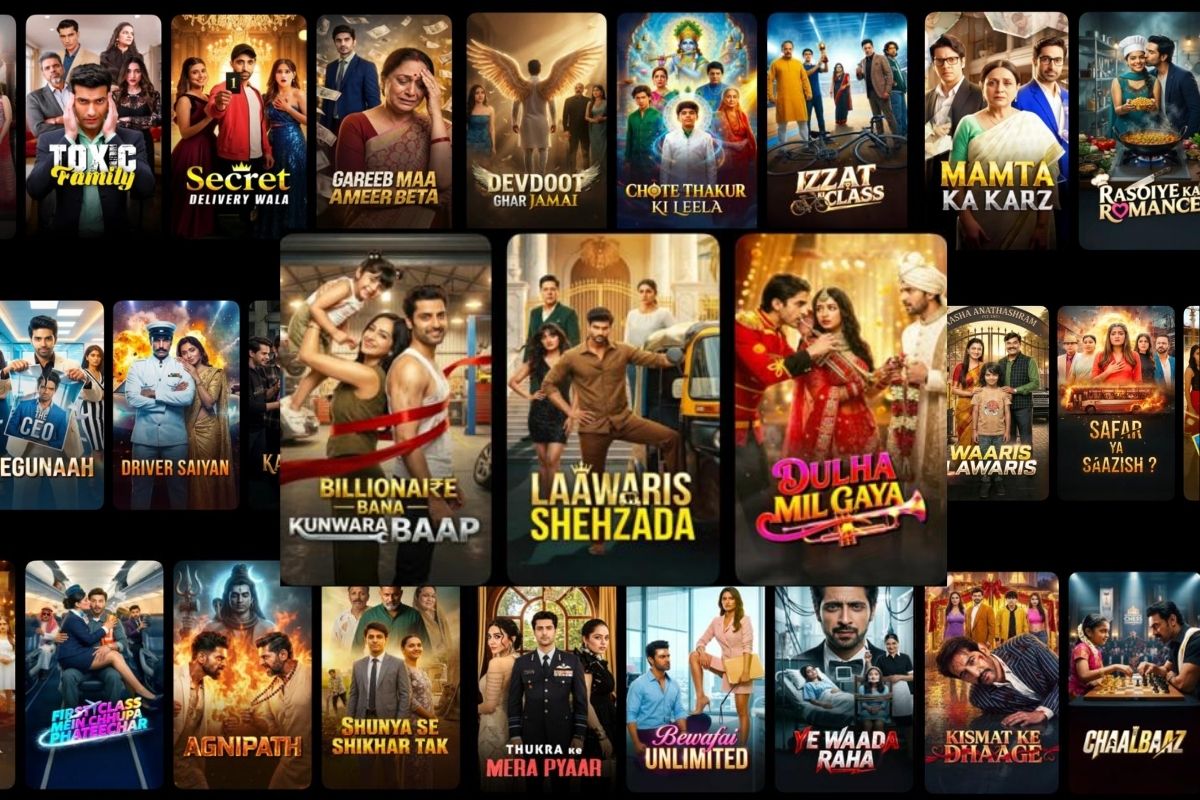
The homegrown social startup is betting big on India’s latest content obsession—minute-long episodes of high-stakes dramas. Cut through the noise and the microdrama hype itself doesn’t add up.

Alakh Pandey and Prateek Maheshwari’s edtech startup will be a first-of-its-kind story from India of a YouTube content platform that has gone on to pull off a public listing.
Indians who are among the world’s largest consumers of free tech products and also significant beneficiaries of free markets suffer from a poor understanding of both technology and accountability. Separately, Aamir Khan breaks a paradigm with a YouTube release.
The homegrown social startup is betting big on India’s latest content obsession—minute-long episodes of high-stakes dramas. Cut through the noise and the microdrama hype itself doesn’t add up.
Alakh Pandey and Prateek Maheshwari’s edtech startup will be a first-of-its-kind story from India of a YouTube content platform that has gone on to pull off a public listing.
Indians who are among the world’s largest consumers of free tech products and also significant beneficiaries of free markets suffer from a poor understanding of both technology and accountability. Separately, Aamir Khan breaks a paradigm with a YouTube release.