/
•
•
Detailed stories on technology startups, business and economic current affairs.
The Bengaluru-based startup is the king of the heap when it comes to apartment security apps. What will it do with its first-mover advantage now?



Editor's note: In the startup world, some sectors and companies are at the centre of all attention because of sheer scale, with billions of dollars in funding being table stakes; e-commerce is a prime example. Others are equally talked about and analysed despite being at the opposite end of the spectrum in size, ranging from web series producers to beer companies to niche juice brands. MyGate is one such startup. When Vijay Arisetty, Sreyans Daga and Abhishek Kumar started MyGate in 2016, it was a simple, permission-based app to monitor movement in and out of gated societies. A visitor or a domestic worker or a delivery person turns up at the gate, the guard taps a smartphone to alert the residents of Flat 5A in Block 3, who have to clear the person’s entry. Within just a couple of years of its 2016 launch, the startup had captured the minds of investors, founders, journalists and analysts. It’s easily the most funded company in the apartment management space, having raised $56 million in October last year in a Series B funding round led …

The Bengaluru-based startup is the king of the heap when it comes to apartment security apps. What will it do with its first-mover advantage now?
Editor's note: In the startup world, some sectors and companies are at the centre of all attention because of sheer scale, with billions of dollars in funding being table stakes; e-commerce is a prime example. Others are equally talked about and analysed despite being at the opposite end of the spectrum in size, ranging from web series producers to beer companies to niche juice brands. MyGate is one such startup. When Vijay Arisetty, Sreyans Daga and Abhishek Kumar started MyGate in 2016, it was a simple, permission-based app to monitor movement in and out of gated societies. A visitor or a domestic worker or a delivery person turns up at the gate, the guard taps a smartphone to alert the residents of Flat 5A in Block 3, who have to clear the person’s entry. Within just a couple of years of its 2016 launch, the startup had captured the minds of investors, founders, journalists and analysts. It’s easily the most funded company in the apartment management space, having raised $56 million in October last year in a Series B funding round led …
After 15 years, more than $550 million in funding and over $200 million in revenue, the cloud kitchen startup must find a way to make a profit and go public. Grover is the man Rebel has chosen for the job.

In less than two years, the instant delivery startup that puts quality above all else has attracted marquee VC investors, earning a valuation of $255 million. How far the niche bet will take it is anybody’s guess.
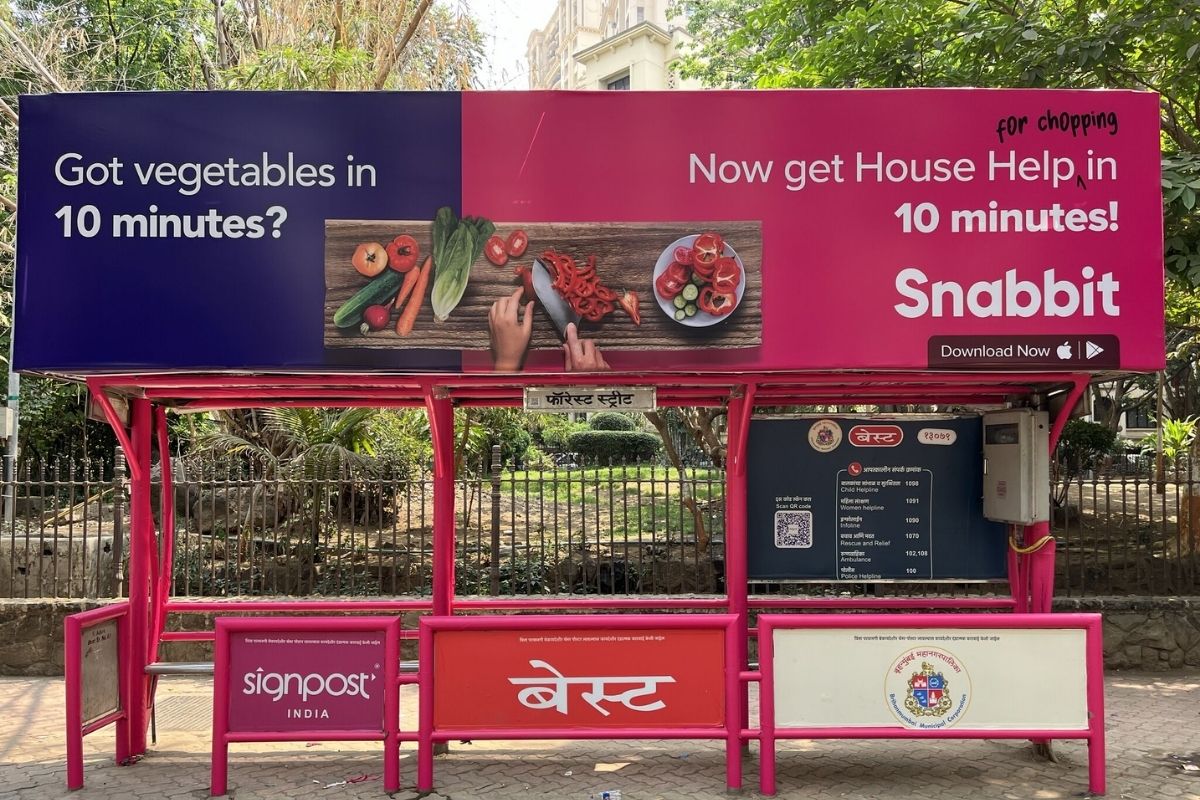
Pricing constraints and uncertain daily-use demand cast doubt on instant help’s ability to replicate quick commerce.
After 15 years, more than $550 million in funding and over $200 million in revenue, the cloud kitchen startup must find a way to make a profit and go public. Grover is the man Rebel has chosen for the job.
In less than two years, the instant delivery startup that puts quality above all else has attracted marquee VC investors, earning a valuation of $255 million. How far the niche bet will take it is anybody’s guess.
Pricing constraints and uncertain daily-use demand cast doubt on instant help’s ability to replicate quick commerce.