/
•
•
Detailed stories on technology startups, business and economic current affairs.
In the fast-changing world of news, editors at the copy desk continue to be gatekeepers of quality and accuracy.


“So, you’re a gardener tending someone else’s yard.”
I’m not a gardener. I know zilch about gardening; my only houseplant (a gift) died of neglect two years ago. But gardening is what an uncle likened my job to at a family gathering years ago. This was the late noughties. Fresh out of journalism school, I was just a couple of paychecks old at a business daily where I edited drafts for a living. The faint sneer in my uncle’s voice, as he described my day job, wasn’t completely lost on me. I managed a polite smile before walking away, sparing everyone the details of the grunt work of editing.
Copy editing, proofreading, fact-checking, line editing, rewriting, substantive editing—the works. With newsrooms severely downsized, the role is now multiple jobs rolled into one, as fluid as the world of journalism. In a nutshell (where I still offer you human-generated summaries, not that anyone cares): once a reporter turns in their draft, the action shifts to the word doctors at the copy desk, or whatever remains of it today.
You would have to be living in a bubble if you didn’t know that over the years, many newsrooms have ditched the traditional freestanding copy desk for a more decentralized system, culling standalone editing jobs to trim the fat.
John McIntyre has seen it all. He retired after 34 years as an editor at The Baltimore Sun and has been a part-time freelance copy editor at The Baltimore Banner for the past four years. “When I began work as a newspaper copy editor 46 years ago, copy editors were widely held in contempt in newsrooms. Comma jockeys. Stylebook pedants,” he says. “Reporters dumped on the desk once their legs or their livers gave out. We worked for years to establish our craft as worthy of respect and had some success, until the sharp-pencil people decided that editing was a frill and threw it all away.”
Today, it’s not uncommon for newsrooms to expect reporters and assigning editors to put on the copy editor’s hat and see the draft through to publication. Some news organizations have been using AI-powered editing tools wherever possible. Quality has suffered as a result.
Kristen Steenbeeke is an associate OK’er (a print copy editor) at The New Yorker; the magazine has a reputation for impeccable editing. She finds it “frustrating, though, to read other publications that work on a faster news cycle and be able to tell that they are skimping on the copy-editor budget. Typos and imprecision can distract from the quality reporting at hand and generate mistrust in readers. Even having a copy editor skim a piece after it goes live is better than nothing”.
Clearly, editing a draft goes far beyond fixing dangling modifiers, maintaining subject-verb agreement or sticking to the house style. That’s the bare minimum, something that is increasingly being left to the machines.
But there’s stuff you can’t trust the machines with. Stuff that lies at the heart of journalism. Stuff that’s also at great risk in a world battered by misinformation and fake news: accuracy and integrity. With newsrooms stretched thinner than ever, editors at the copy desk today have assumed a uniquely important, yet evolving, role. Big words aside, what exactly happens at a copy desk?
Let me walk you through the editing process at The Morning Context. We are a team of two at the copy desk. I work alongside Ashok Raaj, an exceptional editor with far more experience than I have and whose headline-writing skills can put AI to shame.
No two drafts are the same. Some need a light touch, others a butcher’s knife. Typically, a copy lands at the desk after a careful once-over by the section editor. At this stage, the draft is read several times by all the editors, including those at the desk, to ensure the story is true to its pitch and has a cohesive structure.
If the deadline is too close, we all pitch in the moment a reporter turns in their first draft. Make no mistake, this reading—and rereading—is a crucial step; skipping it can have real consequences. Just like using a leavening agent that’s past its prime can result in a flat, sunken cake.
Once the preliminary feedback is out of the way, it’s time for the copy editor to say hello to the reporter. The next few hours typically look like two sailors braving the choppy waters. It’s a long way to the shore. We go wave by wave. But really, line by line. And we have questions.
Did the source really say that, or is it your interpretation? How many subscribers does the app have—exactly 50,000, about that much or more than that? Are two unverified posts on X proof enough that complaints are on the rise? That quote isn’t making any sense; check back with your source? “Three experts we spoke to”—what makes them experts? Why are we taking the startup founder’s word for it?
An important goal of editing is to save the newsroom from embarrassment. Keep an eye out for libel, flag plagiarism, verify everything, fill all the possible gaps—even the tiny, harmless-looking ones. An early draft at The Morning Context last year, for example, mentioned a report that analyzed enforcement orders by India’s market regulator against entities pushing stock tips. Nowhere did the survey say that all those entities continued to operate, but somehow that assumption crept into the draft. The addition, albeit inadvertent, was misleading and was eventually dropped.
Roy Peter Clark, emeritus senior scholar at The Poynter Institute who has authored or edited over 20 books on journalism and writing, puts it succinctly: “Copy editors are the safety net that gives writers confidence. They are the traffic lights that alert everyone: Stop or Caution or Full Speed Ahead.”
A second goal is to cut the fluff, weed out anything that could put readers off, fix convoluted writing—the list goes on.
“The things that people associate with copy editing—fixing typos, making subjects and verbs agree, sorting out homonyms, the basic grammar and usage issues—need to be done to make the text look professional rather than sloppy. A proper copy editor is going to examine focus,” says McIntyre. “Is there a single main point expressed clearly and without undue delay? Is the material organized in an orderly manner that the reader can follow without difficulty? (Is the reader oriented in place and time at every point?) Are the language and tone appropriate to the subject, to the occasion, to the reader? Is there slack language? Nearly any text is likely to benefit from judicious cutting.”
All of this, every step in the editing process that seems too small to matter, starts mattering as the draft inches closer to the finish line. At this point, all the editors at The Morning Context jump back in for a final read and give the green light. All this while, the copy editor also needs to strike a fine balance between two things.
Part of the job of editors is to put themselves in the reader’s shoes. “I may be employed by the writer or the publication, but my job is to stand in the place of the reader, the party most often neglected in these operations,” says McIntyre. “The writer is commonly too close to their work to do this. My working assumption is that if the text is not clear and orderly to me, it is not going to be effective for the reader, and I must seek the means to make it more effective.”
I couldn’t agree more. I like to think of the reader as a friend I want to tell a story to. One who has the attention span of a fruit fly. Start with the most gripping bits to catch their attention, then move on to the rest of the details. It also helps to use easy-to-grasp, relatable language while not dumbing down the story.
Steenbeeke offers a glimpse into the process she follows: “I'm also a poet, and I think I've always zeroed in on the details rather than the big picture. It's less about being persnickety grammar-wise and more about creating a seamless reading experience, where the reader doesn't need to stop to question word choice or notice redundancies or get caught in the snag of a choppy sentence (even if they're doing so subconsciously). It's the satisfaction of solving a puzzle for me—getting everything in its right place.”
At the same time, it’s important to maintain the integrity of the writer’s voice and tone. The idea is not to nitpick or create something entirely new, but to refine what already exists. “I'm in awe of the writers and reporters and the talent it takes to cobble a story together; my job is just to make it as clear as possible, as if I didn't exist,” says Steenbeeke.
At its heart, then, the role of the copy desk in journalism is a profoundly human one. Too human for AI to replicate it in its entirety anytime soon.
The technology may prove to be a valuable assistant, but in a limited way.
“Certainly, AI can do what spell check and grammar check have done for many years—but those tools still seem to suggest edits that are clearly incorrect or that don't take the entire sentence or piece in context,” says Steenbeeke. “The kind of in-depth copy editing we do at the magazine, I think, can't be replicated by a machine, at least for a long time, though of course I'm biased.”
The New Yorker, she points out, still uses style guidance that was in effect around the founding of the magazine, in 1925. “There's a bit of pride in doing things the old-school way that I think would be totally extinguished if we relied on AI,” she says.
In its current form, AI seems to work best when you want to push out routine news reports—corporate earnings, weather updates, sports news and a lot of run-of-the-mill stuff. But relying heavily on AI to edit deeply reported stories has its consequences.
A classic example is Suncoast Searchlight. The nonprofit publication was launched early last year to report across Florida’s Suncoast region. In November, Nieman Lab reported that four Suncoast reporters accused their executive editor-in-chief, Emily Le Coz, of using AI tools to edit stories without their knowledge. A letter reportedly sent to the board detailed how some of their drafts ended up with hallucinated quotes and other misleading information after being edited. None of those drafts was published, though.
Soon after, the publication fired one of the reporters, citing performance issues. The reporters, however, maintained that several drafts edited by the editor-in-chief appeared to have relied on AI and were problematic. From the Nieman Lab report:
“In the draft, someone opposing the bill is quoted as saying, ‘This state is so diverse—Tallahassee shouldn’t be telling people how to live.’ The second half of that quote was not in any of the reporter’s notes. When the reporter asked Le Coz where the quote came from, she said she’d written it as an example of the type of quote she wanted in that section, but forgot to flag that in the document.”
Far from being an assistant, AI seems to have introduced some grave errors in this case. “AI is an infant,” says Clark. “It should be our job to study and experiment as it grows. As an infant, it makes lots of mistakes. It needs an editor.”
Some of those mistakes can prove costly. Like weeds. Left unchecked, they can wreck the entire garden. Or you could hire a diligent gardener.
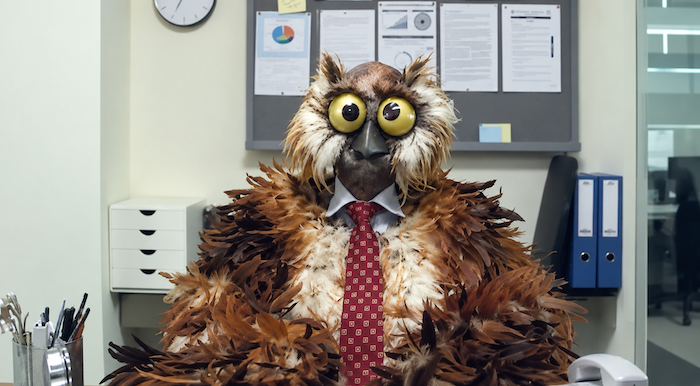
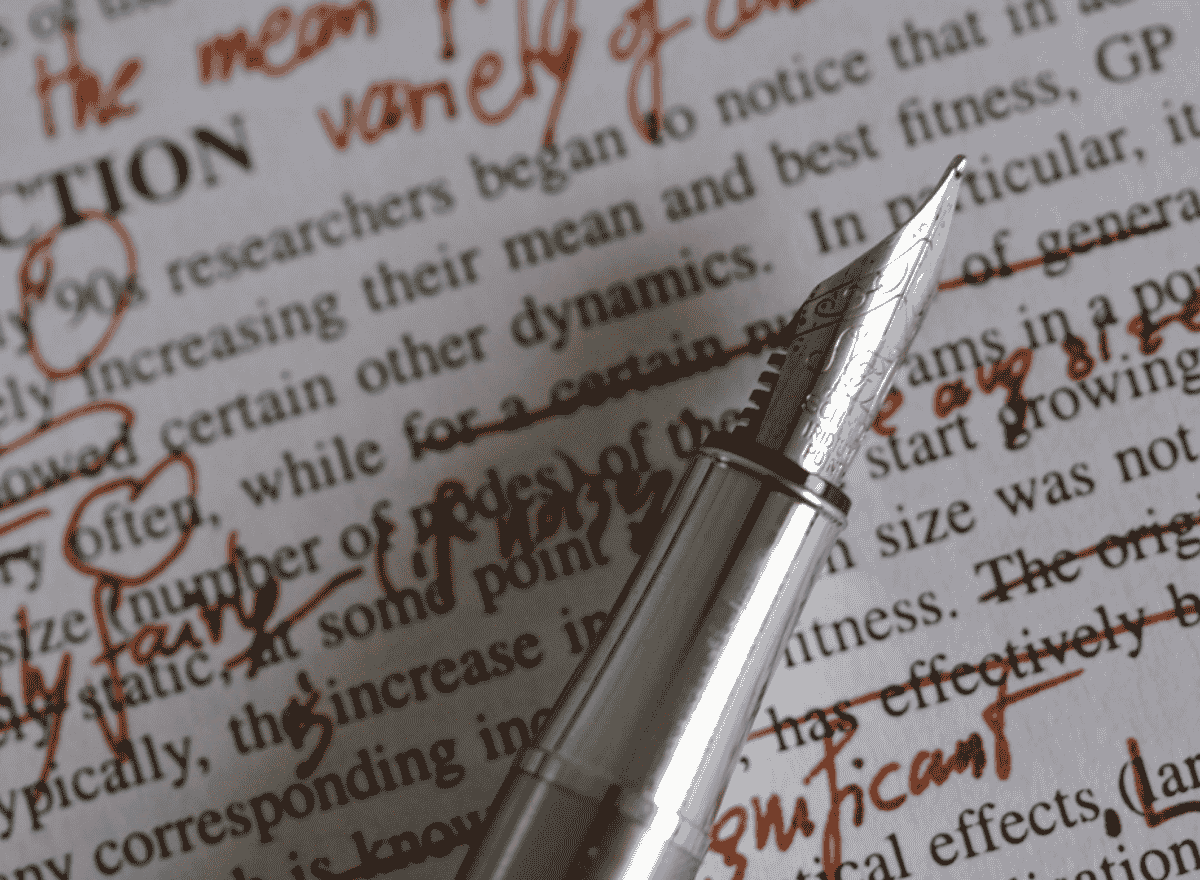
Cover image from Wikimedia Commons